
Navigating cost pressures, supply risks and procurement challenges in 2026
The first half of 2026 has been defined by continued uncertainty for UK manufacturers and steel buyers. Rising material costs, changing trade and quota conditions, geopolitical instability, freight market volatility, energy cost fluctuations and emerging carbon regulations are all contributing to a complex procurement environment in which availability, lead times and supply chain resilience are now as critical as price.
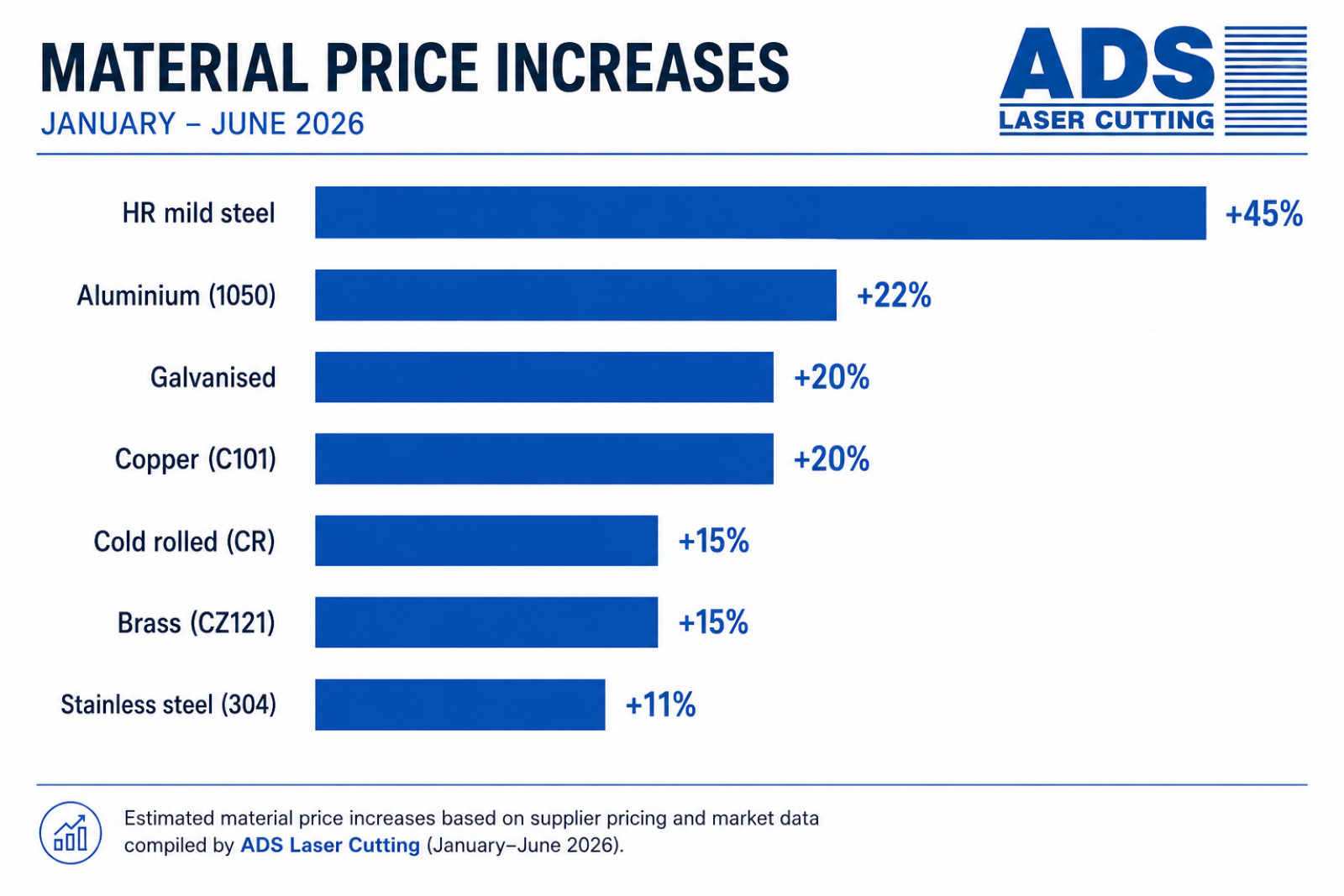
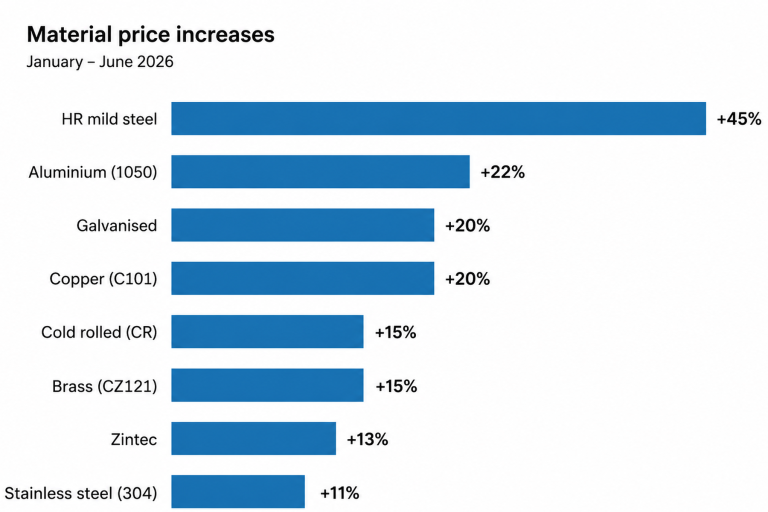
With these factors in mind, the actual increases in material prices provide a clear indication of the pressures facing UK manufacturers.
What’s already influencing steel markets?
Geopolitical instability has remained a significant influence throughout the first half of 2026. Ongoing conflict in Ukraine, heightened tensions in the Middle East, and concerns for shipping through the Strait of Hormuz have all contributed to volatility in both energy and freight markets. Given the strategic importance of this shipping route for global oil and cargo flows, even the potential for disruption has been enough to add uncertainty to transportation costs, steel production inputs and wider supply chain conditions.
Changing buyer behaviour has also impacted the wider market during the first half of the year.
Hot rolled mild steel (HR) prices have increased by 45% since January, prompting many buyers to turn to cold rolled steel, which has seen a more moderate 15% increase. Although CR remains unrestricted, growing demand has begun to affect availability.
This had led to:
- Shortages of 3mm CR material as manufacturers seek substitutes for more expensive HR products
- Increased demand for European material, where shorter lead times remain attractive despite higher prices.
Together, these factors demonstrate how purchasing decisions in one area of the market can quickly create supply pressures elsewhere.
How anticipated changes are shaping buying behaviour
Whilst these factors have already had a tangible impact on pricing and availability, they tell only part of the story. Steel markets are often influenced as much by anticipated change as by current conditions, with proposed policy measures and regulatory developments shaping purchasing decisions well before they are formally introduced.
A significant factor in this respect is the UK government’s new trade policy, which took effect on July 1, 2026, and under which steel imports exceeding allocated quotas are subject to tariffs of up to 50%. Whilst intended to safeguard UK steel and domestic manufacturing, it may create unintended challenges.
Key considerations
- New legislation only applies to raw steel, and not fabricated steel goods
- Some specialist grades of steel are either unavailable or not produced in sufficient quantities within the UK
This is despite the obvious risks they’d take in doing so in relation to quality and service. Additionally, some specialist grades of steel are either unavailable or not produced in sufficient quantities within the UK.
As a result, these proposed changes will lead to increased material costs for manufacturers who are forced to import the raw material. Overall, many believe that these measures will create supply chain disruption and further curtail competitiveness.
Additionally, discussions around reducing HR and HRPO (hot rolled, pickled, and oiled) import quotas by as much as 90%, to approximately 100,000 tonnes annually, have raised concerns about future availability and prices. Similar proposals affecting galvanised steel could see quotas reduced from around two million tonnes to one million tonnes, with imports exceeding those limits facing tariffs of up to 50%.
These developments highlight how market pressures are often driven as much by expectation as reality, with proposed changes already influencing purchasing behaviour. As a result, concerns around availability and pricing have contributed to market volatility, even where material shortages have yet to emerge.
Preparing for the next phase of market uncertainty
Looking ahead, manufacturers are preparing for the introduction of the UK’s Carbon Border Adjustment Mechanism (CBAM) in January 2027. Designed to align the carbon costs of imported and domestic steel, the policy is expected to introduce additional reporting requirements and cost pressures as businesses adapt.
Taken together, the main implications of these developments include:
- The need to continue planning procurement as early as possible.
- The importance of building flexibility into budgets and purchasing strategies.
- The value in maintaining strong supplier relationships and supply chain visibility.
- The advantage of monitoring material availability alongside price.
Against this backdrop, strong supplier relationships and proactive communication become increasingly valuable. Experienced manufacturing partners can help businesses navigate uncertainty through forward planning, improved supply chain visibility and a clear understanding of material availability. By working collaboratively and maintaining flexibility, manufacturers can reduce risk, improve continuity and place themselves in a stronger position for the remainder of 2026 and beyond.
As a trusted manufacturing partner, ADS Laser Cutting works closely with customers to provide the insight, expertise and supply chain support needed to navigate changing market conditions.
With a focus on collaboration, reliability and long-term partnerships, we are well placed to help businesses plan with confidence. To find out more, contact us today.
Further reading:
Carbon Border Adjustment Mechanism (CBAM) – UK Government factsheet: https://www.gov.uk/government/publications/factsheet-carbon-border-adjustment-mechanism-cbam/factsheet-carbon-border-adjustment-mechanism
UK’s steel trade measure from 1 July 2026: https://www.gov.uk/government/publications/uks-steel-trade-measure-from-1-july-2026/uks-steel-trade-measure-from-1-july-2026